How to Create a Meaningful Online Memorial for a Loved One
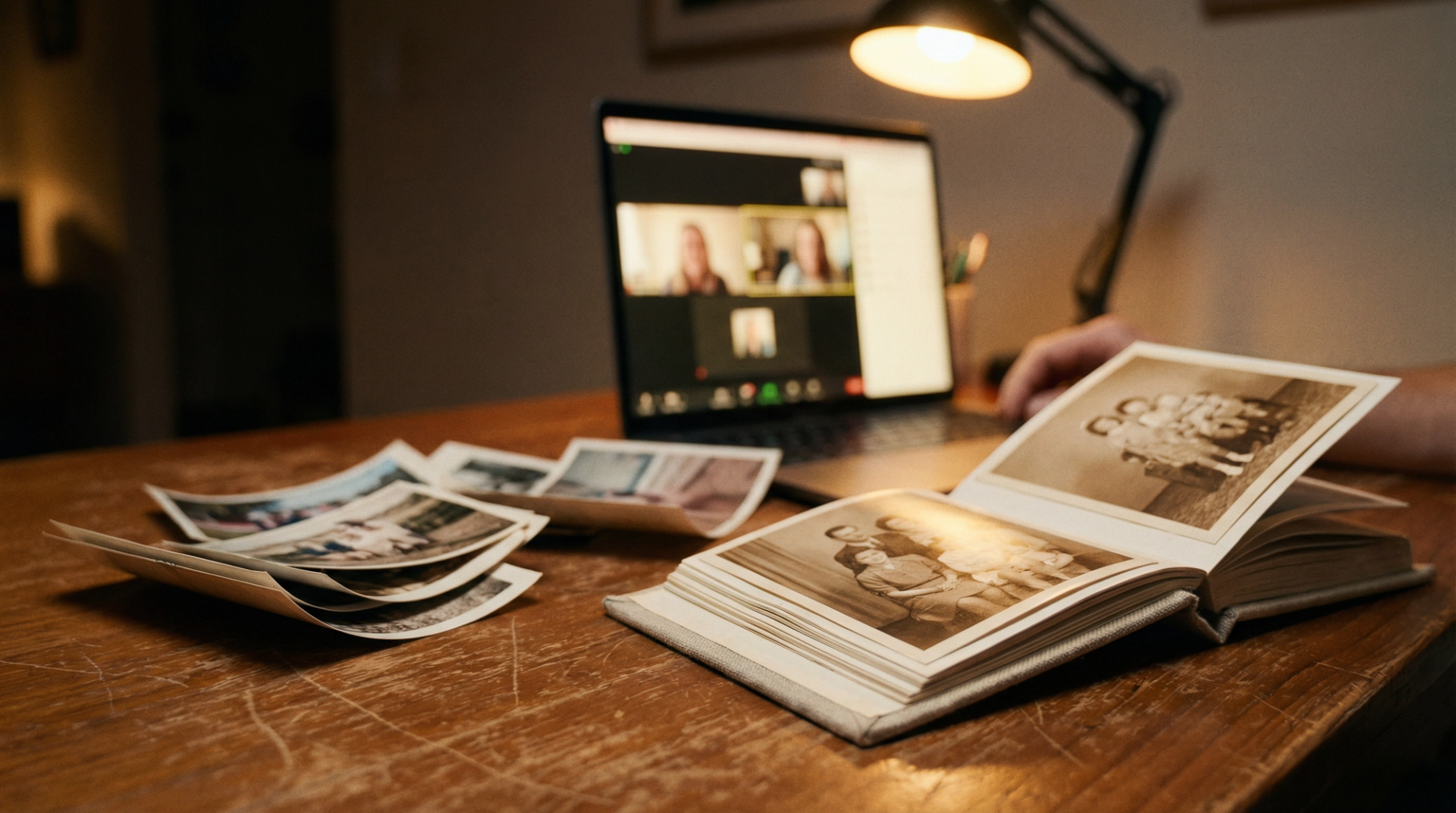
AI-generated image
A step-by-step guide to building a lasting digital tribute that truly honours someone's life.
When someone we love dies, the urge to do something, anything, to preserve their memory can feel overwhelming. You might find yourself scrolling through old photos at 2am, re-reading text messages you'll never receive again, or searching for a way to gather all the scattered pieces of a life into something whole.
That's what an online memorial is for. Not a replacement for grief, not a shortcut through it, but a place where memory lives. Somewhere your family and friends can return to, contribute to, and find comfort in, no matter where they are in the world or where they are in their grief.
This guide will walk you through creating a memorial that feels worthy of the person you've lost. Not just a page with a photo and some dates, but something that captures who they really were.
What Is an Online Memorial?
An online memorial is a dedicated digital space created to honour and remember someone who has died. Think of it as a living tribute rather than a static obituary. Where a traditional obituary announces a death, a memorial tells the story of a life.
A good online memorial can include photographs spanning decades, written tributes from family and friends, stories that capture someone's character, important dates and milestones, and even music or videos that meant something to them. Unlike a physical memorial that exists in one place, an online memorial is accessible to anyone, anywhere, at any time, whether that's a childhood friend in another country or a grandchild not yet born.
The difference between an online memorial and a social media post is permanence and purpose. Social media posts get buried in feeds within hours. An online memorial is a dedicated, lasting space that won't disappear when an algorithm changes or a platform shuts down.
When Should You Create an Online Memorial?
There's no wrong time. Some families create a memorial within days of a death, using it to share funeral details and gather condolences. Others wait weeks or months, when the initial shock has passed and they feel ready to sit with memories more intentionally.
You don't need to have everything ready before you start. A memorial can begin with just a name, a photo, and a few words, and grow over time as family members contribute their own memories. In fact, some of the most meaningful memorials are the ones that evolve, where a cousin adds a photo from a holiday nobody else knew about, or a colleague shares a story that reveals a side of someone their family never saw.
If you're creating a memorial during the immediate aftermath of a loss, keep it simple. You can always add more later. The memorial isn't going anywhere.
Step 1: Gather What You Have
Before you sit down to build anything, spend some time collecting. You don't need everything at once, but having a starting point makes the process less daunting.
Photos are usually the heart of any memorial. Look through your phone, your computer, old email attachments, and physical photo albums. Ask siblings, parents, friends, and colleagues if they have photos too. You'll be surprised what surfaces. A mix of formal and candid shots paints the fullest picture. The professional portrait is lovely, but it's the blurry photo of them laughing at a barbecue that will make people cry.
Key dates and milestones give a memorial its structure. Birth date, places they lived, schools they attended, career milestones, marriages, children. The landmarks of a life. Don't worry about getting every date exactly right. The broad strokes matter more than precision.
Stories and memories are what transform a memorial from a biography into something alive. Think about the things that made this person who they were. Their habits, their sayings, the meals they cooked, the way they answered the phone, the advice they gave whether you wanted it or not. These details matter more than achievements.
Their own words, if you have them. Letters, emails, text messages, social media posts, birthday cards. Anything in their voice. There is nothing more powerful in a memorial than hearing from the person themselves.
Step 2: Choose the Right Platform
Not all memorial platforms are the same, and the right choice depends on what matters most to you.
There are a few things worth considering. First, permanence. Will the memorial still be there in ten years? Twenty? Free platforms that rely on advertising can disappear overnight. Look for services with clear commitments to longevity.
Second, privacy controls. Some families want a completely public memorial that anyone can find. Others want a private space shared only with invited family and friends. Make sure the platform gives you the level of control you need.
Third, collaboration. The best memorials are built by many hands. Look for platforms that make it easy for others to contribute photos, stories, and tributes without needing to create accounts or navigate complicated interfaces.
Fourth, no advertising. A memorial page for your mother should not have banner ads. Full stop. This is worth paying a small amount for.
Finally, consider the design and experience. The memorial should feel respectful and considered, not cluttered or generic. It should feel like a place you want to return to.
Step 3: Write the Story of Their Life
This is the part that stops most people. The blank page. The impossible task of reducing a whole life to words.
Here's the secret: you don't have to write a biography. You don't need to start with "John was born on…" and march through every year in order. The most moving memorials are the ones that capture who someone was, not just what they did.
Start with what comes to mind first. It might be something small. The way they always had a tissue up their sleeve, the way they hummed while cooking, their habit of calling everyone "darling." Start there. The rest will follow.
If you're struggling, try answering these questions:
What would this person want to be remembered for? What made them laugh? What was their greatest kindness? What did they teach you without realising it? What will you miss most on an ordinary Tuesday? What would they say if they could read this?
You don't need to write everything yourself. In fact, a memorial that includes multiple voices, like a spouse's account of how they met, a child's memory of bedtime stories, a friend's recollection of a shared adventure, is richer and more true to life than any single perspective could be.
Write as you speak. This isn't an essay or a formal document. It's a love letter. It's allowed to be imperfect.
Step 4: Select Photos with Intention
Resist the urge to upload every photo you have. Curation matters. A memorial with thirty carefully chosen photos tells a better story than one with three hundred.
Think about spanning their whole life: childhood, young adulthood, middle age, their later years. Show them in different contexts: at work, at home, with friends, alone in a place they loved, holding a child, laughing at something off-camera.
Include at least one photo that shows them in their element, whatever that means for them. A gardener in their garden. A teacher at their desk. A grandmother surrounded by grandchildren. A traveller at the edge of a cliff. These are the photos that make people say, "Yes. That was them."
If you have video, even better. A ten-second clip of someone's voice and mannerisms can convey more than a hundred photographs.
Don't forget to add context. A photo captioned "Dad at Lake Windermere, summer 1987, the holiday where he fell in the lake trying to impress Mum" is infinitely more meaningful than an unlabelled image.
Step 5: Invite Others to Contribute
A memorial created by one person is a portrait. A memorial created by many people is a mosaic. Both are beautiful, but the mosaic captures truths that no single person could.
Once your memorial has its foundation, a photo, a life summary, perhaps a few stories, share it with the people who loved them. Family, friends, colleagues, neighbours, anyone whose life intersected with theirs. Ask them to add their own photos and stories. Give them permission to share the funny moments, the imperfect moments, the real moments.
You might hear stories you've never heard before. The colleague who reveals your father mentored them through a difficult year. The school friend who remembers your mother as the first person who was kind to them. These contributions don't just enrich the memorial. They can bring genuine comfort during grief, reminding you that your loved one's impact extended further than you knew.
Some practical tips for inviting contributions: share the memorial link directly rather than posting it publicly if you want to keep it intimate. Let people know there's no pressure. Some will contribute immediately, others might add something months later when a memory surfaces. Make it clear that imperfect is welcome. The spelling mistakes and the rambling stories are part of what makes a memorial human.
Step 6: Think About What to Include Beyond the Basics
The best memorials go beyond photos and text. Consider including some of the following, depending on what feels right.
A timeline of their life helps visitors understand the arc of someone's journey. It doesn't need to be exhaustive. The highlights, the turning points, the chapters.
Their favourite things. Their favourite song, their favourite book, the meal they always ordered, the place they'd choose to be if they could be anywhere. These small details are surprisingly powerful.
A section for others to leave messages. Not just condolences, but ongoing messages, on birthdays, anniversaries, or just ordinary days when they're missed. This turns a memorial from an archive into a living space.
Links to causes they cared about. If they supported a particular charity or cause, include a link. Many families find that directing donations to a meaningful cause feels more fitting than flowers.
Left This World helps families create beautiful, lasting online memorials. A dedicated space to honour the people who matter most, with photos, stories, and tributes from everyone who loved them. Create a memorial →
Frequently Asked Questions
Keep their memory alive, together
Invite family and friends to share photos, stories, and tributes in one beautiful, lasting space.