How to Write a Tribute to Someone Who Has Died
AI-generated image
You've been asked to write something. Or maybe nobody asked, but you feel the need to put words down anyway, because someone you loved has died and writing feels like the only thing you can do that makes any sense right now.
Either way, you're sitting with a blank page and a head full of memories, and the gap between what this person meant to you and what you can actually put into words feels enormous.
That's normal. And it's okay.
This guide is here to help you find your way in. Not by giving you a script to follow or a template to fill in, but by helping you find your own words, in your own voice, for the person only you knew the way you knew them.
First, understand that there are no rules
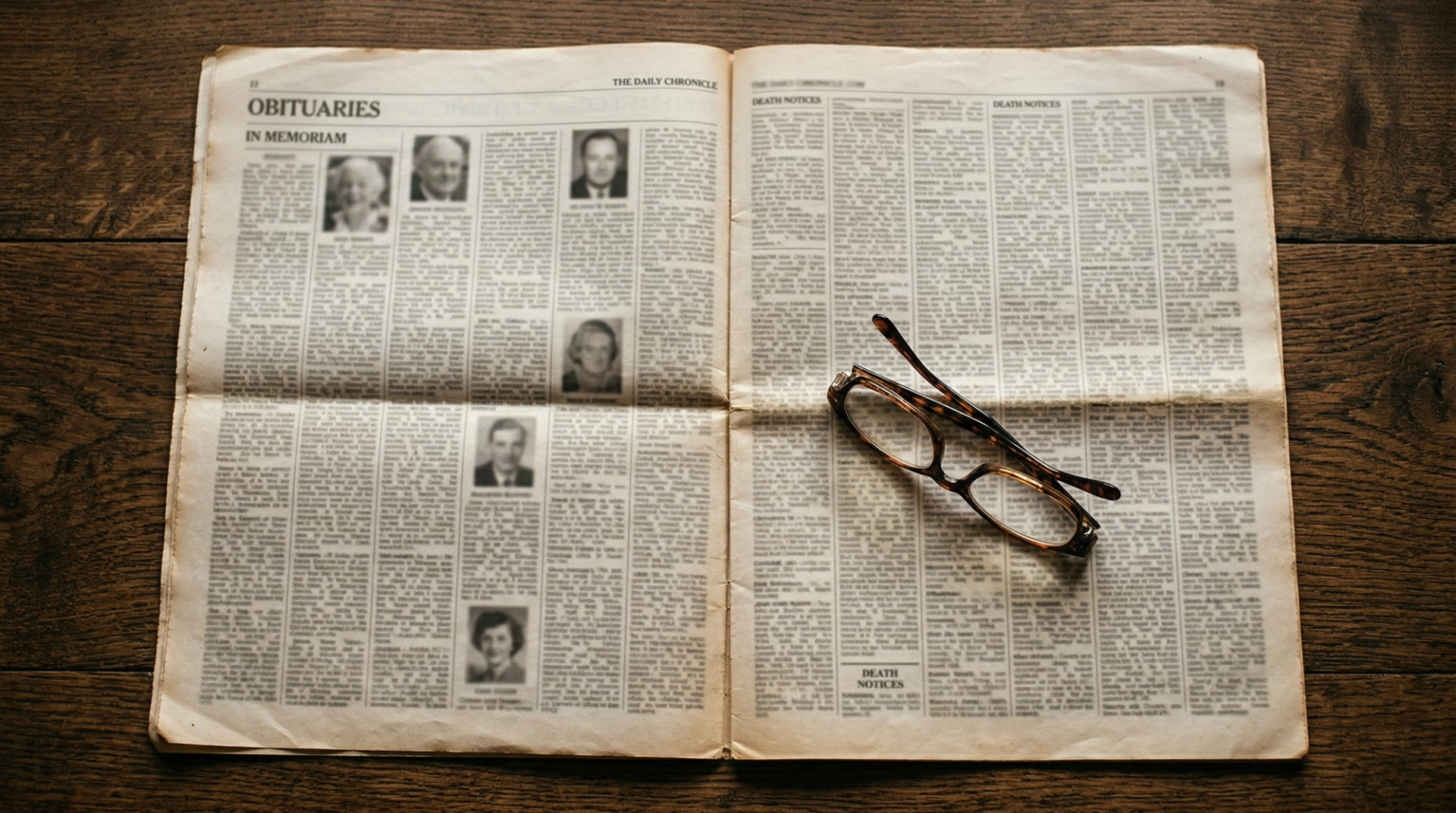
A tribute is not an obituary. An obituary is a factual record of a life: dates, places, career, family. A tribute is something more personal. It's your account of what someone meant, how they made you feel, the things about them that you never want to forget.
A tribute can be spoken at a funeral or memorial service. It can be written for an online memorial page. It can be posted on social media, included in a printed program, or written in a letter that nobody else ever reads. All of these count. All of these matter.
There is no required length. Some of the most powerful tributes are just a few sentences. Others run to several pages. The right length is whatever it takes to say what you need to say.
There is no required tone. Your tribute can be serious, funny, bittersweet, or all three. It should sound like you, not like a greeting card.
Tribute or eulogy: what's the difference
People often use these words interchangeably, and that's fine. But if you're wondering which one you're writing, there is a distinction.
A eulogy is a speech delivered at a funeral or memorial service, almost always by someone close to the deceased. It tends to cover the arc of a life and is usually between three and five minutes long. There is typically one eulogy, or at most two or three, as part of a service.
A tribute is broader. It can be spoken at a service, but it can also be written for a card, an online memorial, a social media post, or a private letter. Tributes can come from anyone, not just the closest family members. A coworker, a neighbor, a school friend from forty years ago can all write a tribute. There is no limit on how many tributes a person can receive.
If you've been asked to give the eulogy at a funeral, you are writing a tribute. If you're adding words to an online memorial, you're writing a tribute. If you're writing something in a card because you can't make it to the service, that's a tribute too. The advice in this guide applies to all of them.
Before you write a tribute: gathering memories
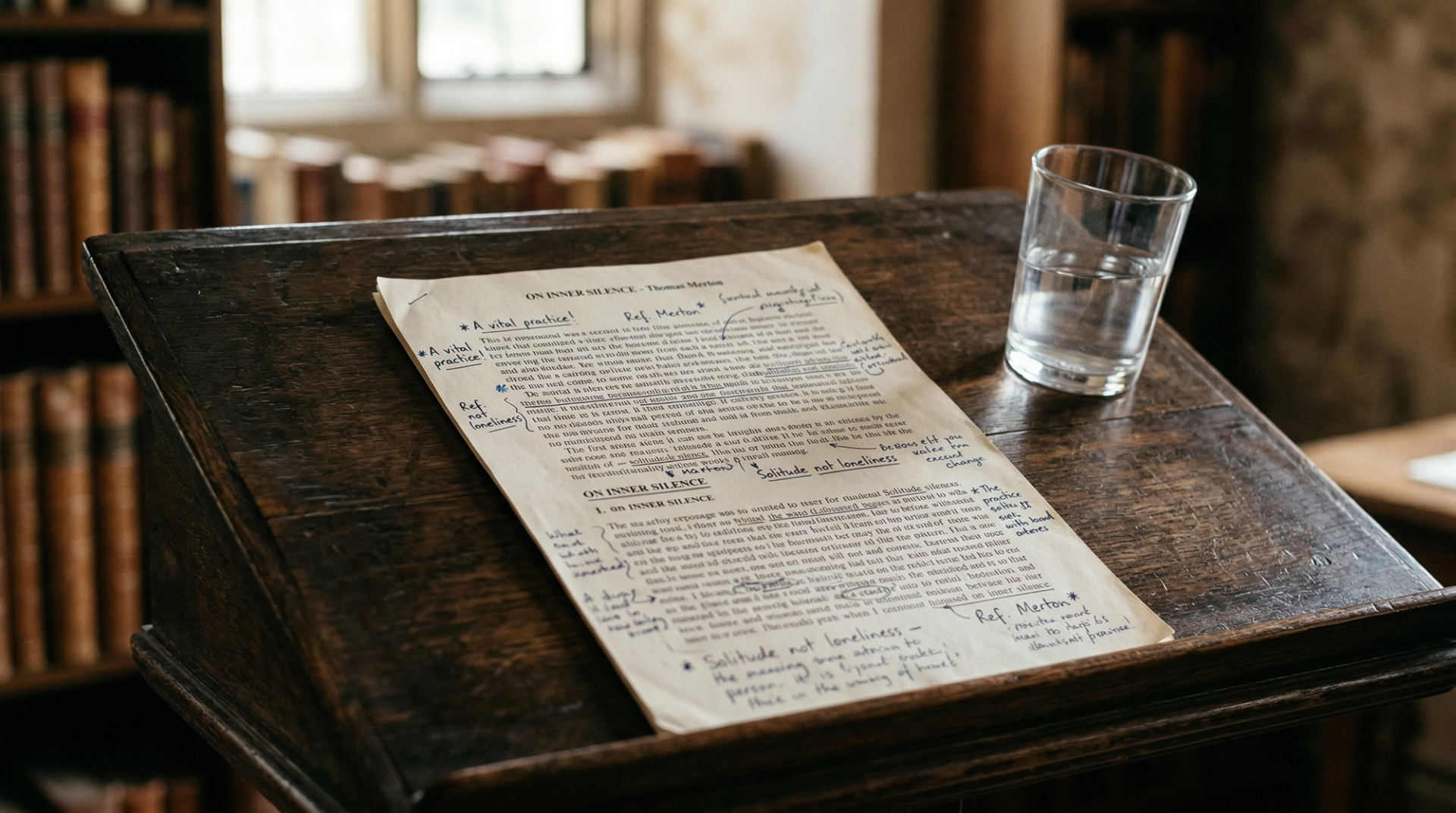
If you sit down and try to write a tribute from scratch, you'll probably stare at the screen for a long time. Instead, spend a day or two just collecting.
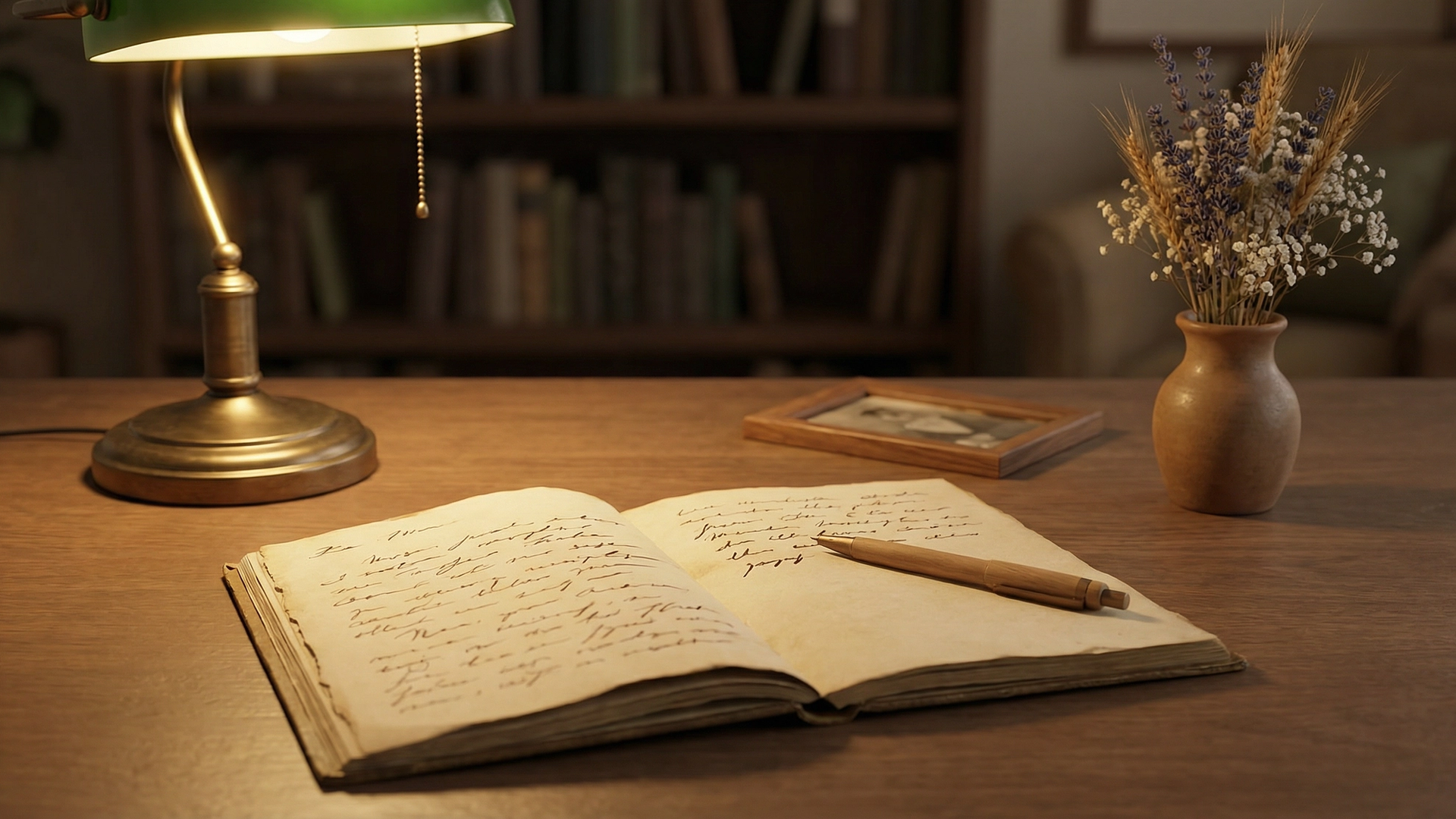
Write down everything that comes to mind. Don't organize it. Don't judge it. Just let memories surface and jot them down as they come. The way they stirred their coffee. The phrase they said so often it became a family joke. The sound of their laugh. The thing they did that annoyed everyone but that you'd give anything to see one more time. None of this needs to be polished. It's raw material.
Talk to other people. Call a sibling, a friend, a coworker. Say "I'm trying to write something about [name], what do you remember?" You will hear stories you've never heard before. A coworker might tell you about the time they stayed late to help a new hire. A school friend might remember something from forty years ago that makes you laugh out loud. These stories are gold. Write them down.
Look through photos. Not to choose photos for the tribute, but because photos unlock memories. A picture from a vacation you'd forgotten about will remind you of something they said, something that happened, something that captures who they were. Let the photos take you back.
Think about their things. The objects someone left behind often say more about them than any biography. Their reading glasses on the kitchen counter. The car they loved. The yard they tended. The cookbook with their handwriting in the margins. What objects come to mind when you think of them?
Finding the thread of your tribute story
Once you have a collection of memories, look for patterns. You'll probably notice a theme emerging, something that connects the different stories and moments. Maybe it's their generosity. Maybe it's their stubbornness. Maybe it's the way they made everyone around them feel safe, or seen, or brave.
This thread is the heart of your tribute. You don't need to state it outright ("Mom was a generous person"). Instead, let the stories show it. If every memory you've collected points to someone who was quietly generous, the reader or listener will feel that generosity without you ever having to name it.
Three good stories that illustrate who someone was will always be more powerful than a list of twenty adjectives.
How to write a tribute, step by step
When you're ready to write, keep these things in mind.
Write like you talk. The best tributes don't sound like essays. They sound like someone talking about a person they loved. If you wouldn't say "she was a beacon of light" in a conversation, don't write it. If you would say "she was the kind of person who'd call you at midnight just to tell you a joke she'd heard," write that instead.
Start with a specific moment. Don't start with "John was born in 1952." Start with something vivid. "The last time I saw Dad, he was arguing with the self-checkout machine at the grocery store, calling it a 'menace to society,' while the line behind him tried not to laugh." A specific moment pulls people in immediately.
Include the small things. Grand achievements are worth mentioning, but it's the small, specific details that make people cry in the good way. The way they always had mints in their pocket. The noise they made when they sat down. The fact that they could never remember anyone's birthday but never forgot to ask how your job interview went.
Don't be afraid of humor. If the person you're writing about was funny, your tribute should be funny too. Laughter at a funeral or in a memorial is not disrespectful. It's a celebration of who someone actually was. If they'd want people laughing, let people laugh.
Be honest. You don't need to pretend someone was perfect. Nobody is, and everyone in the room knows it. You can acknowledge someone's flaws with warmth. "He was the most stubborn man I've ever met, and I mean that as the highest compliment." Honesty makes a tribute feel real. Perfection makes it feel hollow.
It's okay to include yourself. A tribute is about them, but it's told through your eyes. Don't be afraid to include how they made you feel, what they taught you, how knowing them changed you. "Because of her, I learned to..." or "He showed me that..." connects the person's life to the people still living it.
Structuring a tribute (if you want to)
You don't need a rigid structure, but if it helps to have a shape, here are a few approaches that work well.
Chronological: Walk through their life from beginning to end, picking one or two moments from each chapter. Childhood, young adulthood, career, family, later years. This works well for longer tributes and for people whose life had distinct chapters.
Thematic: Choose three or four qualities that defined them and tell a story that illustrates each one. "She was fiercely loyal. Let me tell you about the time..." This is often the most natural structure for spoken tributes at a service.
A single story: Sometimes one story says everything. If there's a moment that perfectly captures who someone was, you can build an entire tribute around it, exploring what it reveals about their character, their values, their way of being in the world.
A letter to them: Write the tribute as though you're talking directly to the person. "You probably wouldn't believe the turnout today..." This can feel more natural than writing about someone in the third person, and it often produces the most emotionally honest tributes.
Tribute examples (for parents, friends, partners)
Reading someone else's words won't tell you what to write. But seeing how other people have done it can make the blank page feel less frightening. Not the shape or the structure so much as the permission. Permission to be specific. Permission to be funny. Permission to include the small, strange details that don't seem important but are actually the whole point.
None of these are templates. They're examples of what tributes can sound like when someone stops trying to write something perfect and instead writes something true. You'll notice they aren't all polished. Some of them wander. Some of them end in places that aren't tidy. That's what honest writing about a real person looks like, and it's more powerful than anything neat.
A tribute to a mother (read at a funeral)
"I don't really know how to do this, so I'm just going to talk about her and hope it comes out right.
Mom was up every morning at six. She had the morning news on before the coffee was ready, and by the time any of us came downstairs there'd be two rounds of toast already made, cut into triangles because that's how she'd always done it and she wasn't about to change now. She worked at the doctor's office for twenty-seven years. Front desk. She knew every patient by name, and most of their kids by name, and if you were in the waiting room looking nervous she'd come out from behind the desk and sit with you for a minute. I know this because people have told me since she died. She never mentioned it herself.
She was not always easy. I want to be honest about that because she'd want me to be honest. She worried. About everything, about all of us, all the time. She'd call you three times if you were driving in the rain. She'd keep food she'd made in the freezer for months, labeled with your name, in case you came home unexpectedly. The freezer was always full. I went to clear it out last week and I couldn't do it. I just stood there looking at her handwriting on the labels.
She loved Jeopardy. She loved her garden but she was pretty bad at it and would never admit it. She had a particular way of saying 'alright, we're done here' that meant the conversation was over and you'd better not push it.
I keep going to call her. I called her every evening on my drive home and now I just drive in silence and it's the worst part of the day. I don't know when that will stop. I don't think I want it to stop, actually, because the day I stop reaching for the phone is the day it starts to feel normal that she's gone, and I'm not ready for that.
She would be furious about all of this fuss. She would tell me to stop crying and have a cup of coffee. So I'll stop here, Mom. But I need you to know, from all of us: we heard you. Even when we rolled our eyes. We heard you."
A tribute to a father (read at a funeral)
"Dad wasn't someone who told you what he was thinking. You had to watch what he did, and then work backwards.
He drove me to Little League every Saturday for about eight years. Hundreds of mornings. He'd sit in the bleachers and read the paper while I played, and when I got back to the car he'd say 'how'd it go' and I'd say 'fine' and that was the conversation. But he was there. Every week. Even the winter he had his hip replaced, he drove me there and sat in the cold because he said he didn't want to let me down, even though I was sixteen and could have gotten a ride.
He wasn't always easy to be around. He could go very quiet, and when he was quiet the whole house felt different. You didn't always know what you'd done. My sister and I have talked about this since he died, and I think it's important to say it, because pretending he was perfect wouldn't be him. He was complicated. He had his dark patches. But he was trying, and I think he was trying harder than any of us understood at the time.
The thing I keep coming back to is the garden. He started it when he retired, and it was the happiest I ever saw him. He was out there every day. He grew tomatoes and peppers and these enormous zucchini that nobody wanted but he'd bring inside anyway. He'd come through the back door covered in dirt with a zucchini the size of a baseball bat and say 'who wants one' and we'd all say no and he'd leave it on the kitchen counter anyway.
I went out to the garden a few days ago. Someone had left a pot of marigolds by the fence. I don't know who. I didn't know he'd gotten friendly with the neighbors, but apparently he had. Apparently he talked to people over the fence all the time. Apparently he was pretty chatty. That's the thing about Dad. There was always more going on than he let you see.
I wish I'd asked him more questions. That's what I'm left with. I wish I'd sat in the car and said something other than 'fine'."
A tribute to a partner (written for an online memorial)
"I'm writing this at the kitchen table and I can see his coat still hanging by the door and his shoes underneath it. I know I need to move them at some point but not yet.
We were married for nineteen years. I've been trying to think of what to say about that and the truth is I can't fit it into words. I keep starting and then deleting it. So I'll just say some things about him and hope that's enough.
He made coffee with the grounds way too strong. Every time. I told him for nineteen years that nobody else could drink it and he'd look at me like I was the one doing it wrong.
He was kind to everyone but he was particularly kind to anyone who was having a bad day. He noticed. He'd ask the checkout person how their shift was going. Not in a showy way. He just paid attention to people.
He couldn't cook. At all. He once made a stir fry that was genuinely inedible and then looked so disappointed that we all ate it anyway and told him it was fine. The kids still talk about it.
He was scared of the dentist. Seriously scared, like a kid. I used to have to go with him and sit in the waiting room. A forty-six-year-old man who needed his wife in the waiting room. He'd come out afterwards acting like nothing had happened and I'd pretend I hadn't noticed his hands were shaking.
He was the best father I've ever seen. Not because he did anything dramatic, but because he was consistent. Every night, every bedtime story, every packed lunch, every school morning. He didn't see any of it as a favor. He just did it because they were his kids and that's what you do.
I don't know what else to say. I miss him in a way that doesn't have a shape yet. It's everywhere. It's in the coffee and the coat and the empty side of the bed. People keep asking if I'm okay and I keep saying yes because I don't know how to explain that I'm not, and I won't be for a long time, and that's just how it is now."
A tribute to a grandparent (read at a funeral)
"Grandma had a rule about cookies. There was always a tin. It was a round blue tin with a picture of some lighthouse on the coast, and I don't think she'd ever been to that lighthouse, but that was the tin and nobody questioned it. The rule was: you could have as many cookies as you wanted, at any time, for any reason, but you had to sit down at the table. No eating cookies standing up. No eating cookies on the couch. She was very firm about this. I still don't know why.
She had opinions about everything. She'd watch the news and yell at the television. She'd check the weather forecast and then disagree with it. She once told a parking attendant that he was being unreasonable, and I think she genuinely believed he would reconsider. He didn't. She talked about it for weeks.
She left school at fifteen and worked in a factory until she married Grandpa, and then she raised four kids in a three-bedroom house on a single income, and I don't think anyone ever asked her whether she was happy or what she wanted for herself. That wasn't how it worked in her generation. I think about that sometimes.
She taught herself to use a tablet when she was eighty-one because she wanted to see photos of the grandkids. It took her about three months and she complained about it constantly, but she did it. She'd FaceTime us and hold the tablet so close we could only see her forehead. We never told her.
I'm going to miss the cookie tin. I'm going to miss the phone calls where she told me the weather in her part of the country as if it were international news. I'm going to miss her saying 'well, I'd better let you go' after forty-five minutes, as if I was the one who'd been keeping her.
She was tougher than anyone I know. Not in a dramatic way. In the way of someone who just got on with it, every day, for eighty-nine years, without expecting anyone to notice."
A tribute to a friend (written for an online memorial)
"I've been putting off writing something here because I keep thinking I'll find the right words tomorrow. It's been three months. I don't think the right words are coming, so these will have to do.
I met Claire when we were eleven. She sat next to me in science because our last names were next to each other alphabetically. That was it. That was the whole reason. And from that one accident of the alphabet I got twenty-three years of someone who knew me better than I know myself.
She was not the person who walked into a room and everyone noticed. She was the person who walked into a room and the three people who mattered most to her felt immediately better. She didn't need everyone to like her. She just needed her people, and if you were one of her people, she was all in.
We used to go walking. Not serious walking, not with hiking boots and trekking poles. Just walking, around the park, around the town, around nowhere in particular. Talking about everything and nothing. I can't go past the park now without expecting to see her waiting by the gate in that green coat she'd had for about a hundred years.
She'd be annoyed that I'm being this serious. She'd tell me to write something funny. Okay, Claire: you were a terrible driver. Genuinely terrible. You reversed into a post in a parking lot that was almost empty. You once turned left when the GPS said right and ended up in some strip mall in New Jersey and somehow blamed me even though I was in a different car. You thought parallel parking was a conspiracy.
I miss her. That's all I've got, really. I just miss her."
A tribute to a colleague (written for a memorial page)
"I sat next to David for six years and in that time I learned that he always ate the same lunch (turkey on rye, no mustard), that he could fix any spreadsheet ever created, and that he had very strong feelings about people who didn't refill the coffee machine.
He was the person you'd go to when you were stuck on something, not because he'd give you the answer right away, but because he'd actually listen. He'd pull a chair over to your desk and sit there and look at the screen and ask questions until you worked it out yourself, and then he'd say 'there you go' as if you'd done it on your own.
I didn't know him well outside of work. I know he was married, and I know he had a daughter who was about to start college, because he talked about her a lot in the weeks before. He was nervous for her. Excited, but nervous. He kept asking people in the office whether their kids had settled in at school, trying to reassure himself.
I just wanted to say that he was one of the good ones. The team isn't the same without him and it won't be."
Shorter tributes for a memorial page or card
Not every tribute needs to be long. Some of the most honest things people write are just a few sentences, put down quickly, without worrying about whether they're good enough. They always are.
"I didn't know your mom well but she used to wave at me every morning from her front yard when I walked the dog. Every single morning, rain or shine. I've walked past the house three times this week and each time it hits me that she won't be there. Small thing, I know. But I wanted to say she made my mornings better and I'm sorry she's gone."
"Uncle Ray, I'm still angry that you didn't tell us you were sick. That's not how I want to start this but it's the truth and you'd appreciate the honesty. You were my favorite person in the family and you know you were. I'm going to miss you at Christmas more than I can say."
"I only worked with Helen for about eighteen months but she was the first person who made me feel like I actually belonged there. She probably didn't even realize. I hope her family knows she made a difference to people."
"Dad, I found your notebook in the nightstand drawer. The one where you kept track of all our birthdays and what you'd gotten us each year going back to about 1995. You never remembered our birthdays. That's what we always said. Turns out you just wrote it all down so carefully that it looked effortless. Typical."
If you're reading the tribute at a funeral
If your tribute will be spoken at a funeral or memorial service, a few practical tips.
Keep it to 3-5 minutes. That's roughly 500-750 words. This might feel short, but it's plenty. Services often have multiple speakers, readings, and music, and a focused tribute is more powerful than a long one.
Print it in a large font. You may be tearful. You may be shaking. Make it easy to read. Double-spaced, 16-point font, with clear paragraph breaks.
It's okay to cry. Nobody expects you to get through this without emotion. Pause, breathe, take your time. The audience is on your side. If you can't continue, it's perfectly fine to hand the printed copy to someone else to finish reading.
Practice once or twice. Not to memorize it, but to get familiar with the rhythm and to identify the parts where your voice might catch. Knowing where the emotional peaks are helps you prepare for them.
Have a backup reader. Ask someone you trust to be ready to step in if you need them to. This isn't a sign of weakness. It's good planning.
If you're writing for an online memorial
Writing a tribute for an online memorial is a little different from writing something to be read aloud. The audience is broader, the context is different, and the tribute will exist for a long time.
Write for someone who may not have known them. At a funeral, everyone in the room knew the deceased. Online, a grandchild born twenty years from now might read your words. Include enough context that someone unfamiliar with the person can understand who they were and why they mattered.
You don't have to write everything at once. One of the advantages of an online memorial is that you can add to it over time. Start with what comes naturally now, and add more as memories surface in the weeks and months ahead.
Invite others to contribute. The richest online memorials include tributes from multiple people. Each person knew a different side of the person. A coworker's tribute will reveal something a family member never knew. A childhood friend's memory will transport everyone back to a different era. Together, these perspectives create a portrait that no single person could have written alone.
If you're thinking about creating a dedicated space for these tributes, our guide on how to create a meaningful online memorial walks through the process step by step.
When the words won't come
Sometimes they just won't. And that's okay too.
If you're struggling, try one of these starting points:
"The thing I'll miss most is..." "Nobody could... the way they could." "They taught me that..." "My favorite memory of them is..." "If they were here right now, they'd probably say..." "The world is quieter without them because..."
Write your answer to any one of these and you'll have the beginning of a tribute. The rest will follow.
If you'd like a starting point you can shape into your own words, our guided eulogy writer can help. Tell it a few things about the person, their name, your relationship, a memory or two, and it will draft something you can edit, rewrite, or just use as a prompt to get your own thoughts flowing. It's not a replacement for your voice. It's a way to get past the blank page.
And if you're looking for help with what to say in a card, a message, or a conversation rather than a formal tribute, our guide on what to say when someone dies covers that ground.
What matters most
Here is the most important thing to remember: there is no wrong way to write a tribute. If it comes from a place of love, it's enough. If it's imperfect and raw and unfinished, it's enough. If it's three sentences or three pages, it's enough.
The person you're writing about wouldn't care about perfect grammar or elegant phrasing. They'd care that you sat down, thought about them, and tried to put into words what they meant to you.
That's the tribute. The writing is just the shape it takes.
Left This World is a place where tributes live permanently, contributed to by everyone who loved them. Create a space to gather photos, stories, and memories that honor the people who matter most. Create a memorial →
Frequently Asked Questions
A place to remember, whenever you need it
Create a memorial page your family can return to — today, next year, and for years to come.