AI-generated image
After the funeral
After the funeral, a place that stays.
When the service is done and the cards have stopped arriving, this is somewhere quiet for photos, stories and the people who loved them to gather. There is no right time to begin, and no rush.
The pause after the funeral
The funeral is over. The flowers have wilted. Friends have returned to their own lives. Family has dispersed back to other cities. The casseroles have stopped arriving. And the absence is louder than it was a week ago.
Most families find this period harder than the funeral itself. The structured time of the service has ended, and the long, quieter weeks of grief have begun. A small number of practical things still want doing, but most of what is left is the work of remembering.
For some families, this is when an online memorial begins to feel right. Not as a rush to capture everything, but as somewhere to put what already exists. The photos in everyone's phones. The stories that were told at the wake. A few lines that someone wanted to read but didn't get to. There is no right time to begin, and no rush.
Why a page of its own
What a memorial page does that a Facebook tribute doesn't
It stays in one place
Photos, stories and tributes live together on one page rather than scrolling away on a feed. You can return to it on a birthday, an anniversary, or a quiet Tuesday.
It is private by default
Only the people you invite can see the memorial. It is not listed publicly and never appears in search engine results. Family and friends are the audience, not strangers.
It invites contribution
Friends and family who could not attend the funeral can add their own photos, stories and tributes from wherever they are in the world. The memorial grows over time, with everyone's hand in it.
It does not depend on a platform's algorithm
There is no feed to scroll past, no advertising in the margins, no platform showing visitors something else they might prefer. The page is for your person.
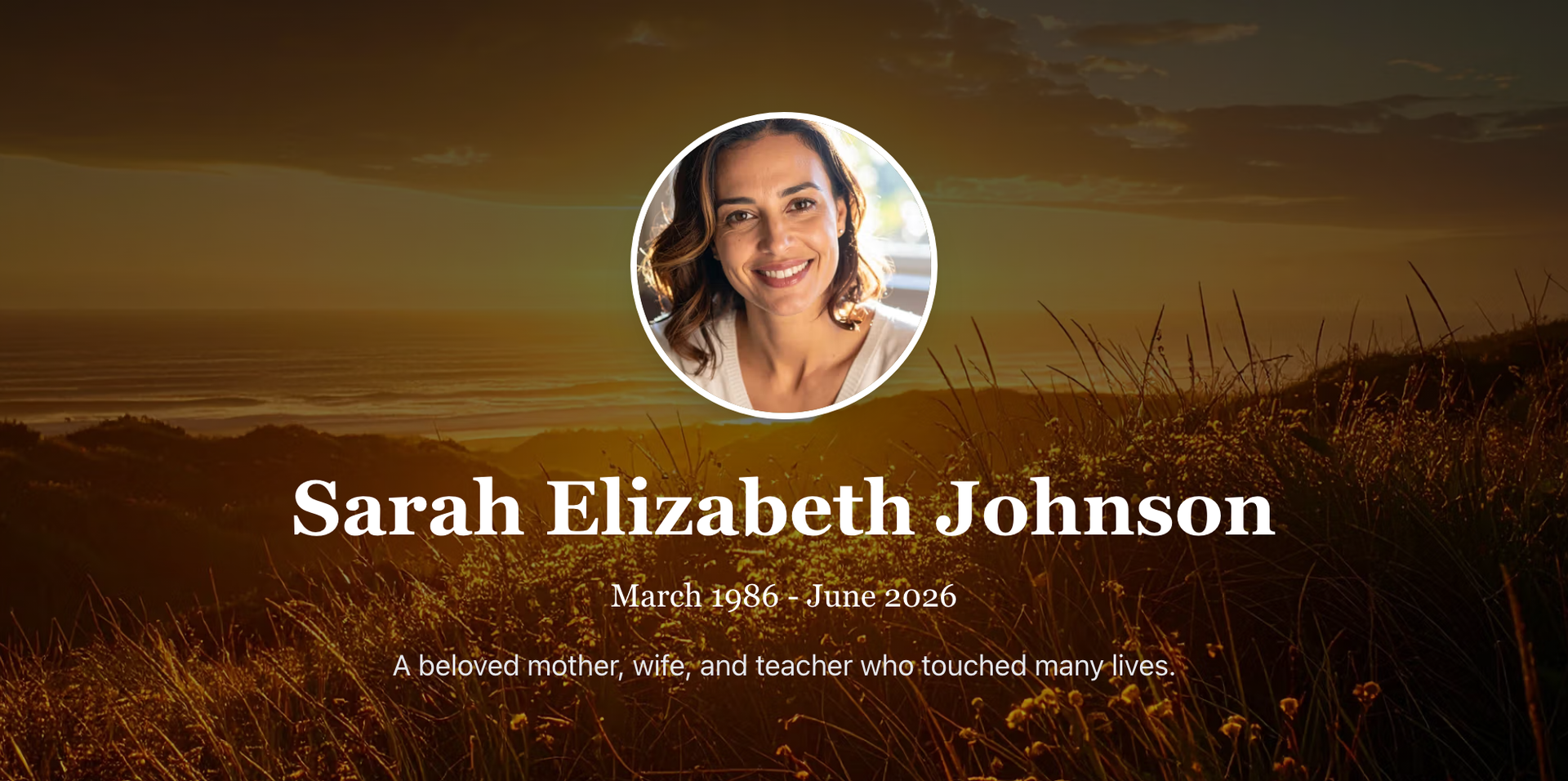
What to include in a memorial
There is no set list. Most memorials grow into something like this:
- Photographs. The wedding day, of course, but also the everyday ones. The kitchen in their old jumper. The garden in spring. The grandchild in their lap. The photos no one else thinks to choose.
- A biography. Not an obituary. The shape of who they were, in your words. Where they were born, the people who shaped them, what they loved, what made them laugh. A few hundred words is plenty.
- Stories from people who loved them. Invite siblings, friends, colleagues, neighbours to add their own. A memorial built by one person tells one story. A memorial built by many tells the truer one.
- Their music, if they had a sound. A favourite song embedded on the page, or a playlist of what they used to put on at Sunday lunches.
- A family tree, if that feels right. A way for grandchildren and great-grandchildren to find their place in the line.
How to start, when you are ready
Five steps. There is no time pressure on any of them.
Choose one good photograph
The photograph that makes you stop when you scroll past it. That is the one. A memorial built around one good image is enough to begin.
Write a few lines about them
Their name, the years that contained them, the shape of their life. A paragraph is enough. You can come back and write more whenever you want to.
Add a few more photos and a story or two
When you have time, sit with the family WhatsApp group or the box of old prints. Choose ten photos. Write down one or two stories that you do not want to lose.
Invite the people who loved them
Send an invite link to family and friends. They can add their own photos, stories and tributes. This is when the memorial stops being yours and starts being theirs too.
Come back to it on a date that matters
Anniversaries, birthdays, the day the leaves turn. The memorial is somewhere to return to. It is not a project to finish.

When to share it
There is no right time. Some families share the memorial on the way home from the funeral. Others wait a few weeks for the family group chat to quieten. Some share it on the one-year anniversary, as a way of marking the date.
Families also build memorials for people who died years ago, especially as grandchildren grow up and want to know who the person was. There is no statute of limitations on remembering.
A few questions families ask
Is it too late to create a memorial if the funeral was weeks or months ago?
No. Many families create memorials weeks, months or even years after a death, as a way to give the memory of the person a permanent home once the immediate aftermath has settled. Memorials created later often feel calmer and more considered than those built in the first chaotic days.
Will an online memorial replace visiting the grave?
No. An online memorial complements physical places of remembrance rather than replacing them. Families who have a graveside or a place of scattering often find a memorial adds something different: a place where stories and photos can live alongside the physical location.
How private can a memorial be?
Left This World memorials are invite-only by default. They are never listed publicly and never appear in search engine results. Only the people you invite with the link can see the page. This is the default, not a paid upgrade.
What happens if I stop paying?
Your memorial stays online until the end of the period you have paid for. After that it goes offline and guests can no longer reach it. Your content is not deleted at that point: it is kept for at least 30 days, so resubscribing within that window restores everything as it was. You can export the whole memorial from your account at any time.
Can people in different countries contribute?
Yes. Anyone with the invite link can post photos, stories and tributes from anywhere in the world. This is often the strongest reason families create a memorial in the first place. Family scattered across countries, friends abroad, former colleagues from years ago: all can take part.
What if I am not sure I am ready?
That is a completely reasonable place to be. Some families wait six months, a year, or longer before building a memorial. There is no deadline. Save a few photos and notes in the meantime, and return to the decision when it feels right.
When you are ready, take a look
The demo memorial is the gentlest place to start. No card, no signup, just an example of what one looks like.
Related guides
Related reading
Read more from the blog →
How Much Does a Funeral Cost in the US?
A clear breakdown of what funerals actually cost in the United States in 2026. Cremation vs burial, what each line item covers, regional differences, and what help is available.
How to Write a Eulogy: Finding the Right Words for a Funeral
A practical, honest guide to writing and delivering a eulogy. How to find the right stories, structure your words, and get through it on the day, even if your voice breaks.
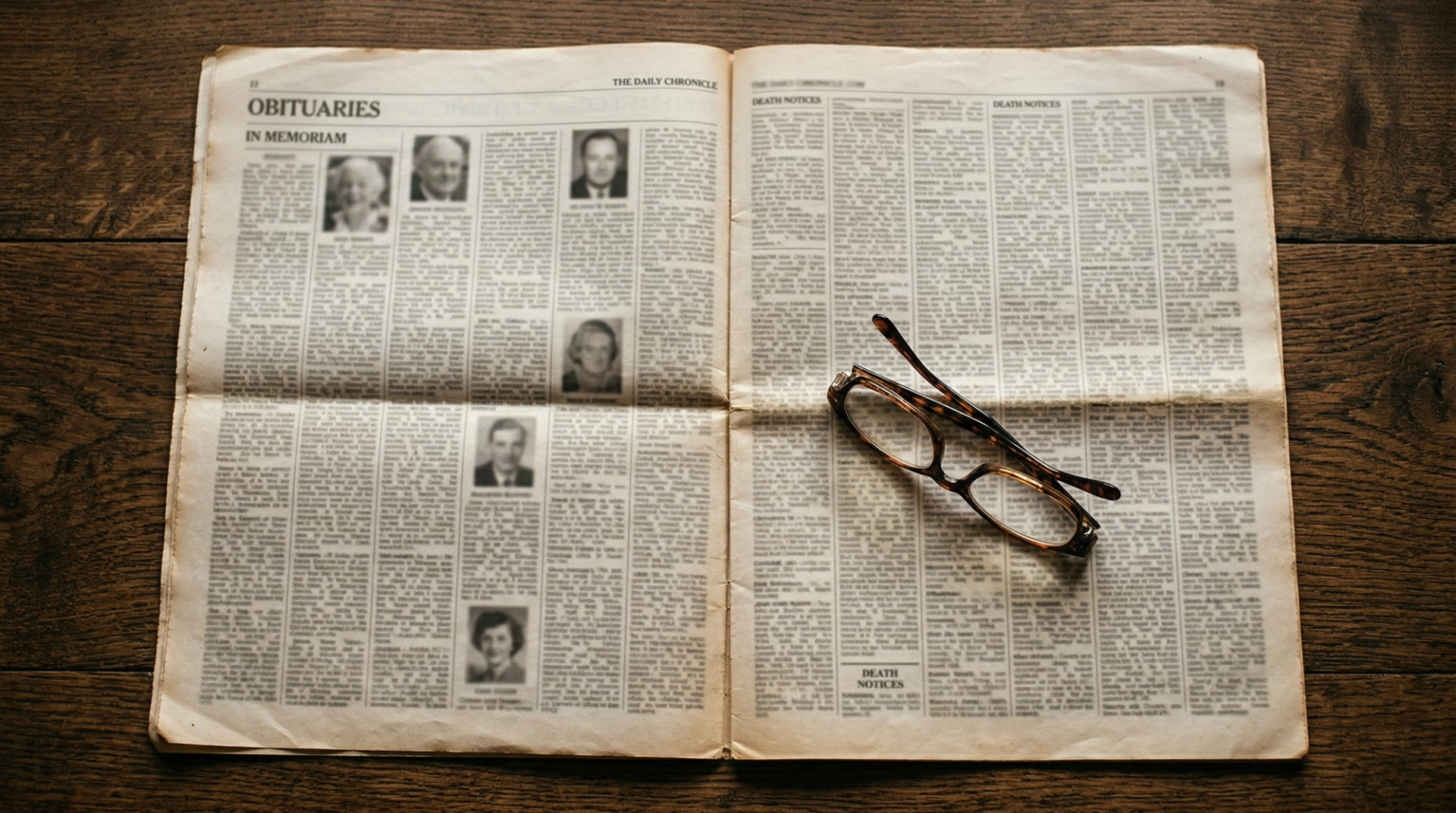
How to Write an Obituary: A Practical Guide with Examples
A clear, honest guide to writing an obituary for someone who has died. What to include, what to leave out, where to publish it, and how to make it feel like them.